Archives
-
March 2026
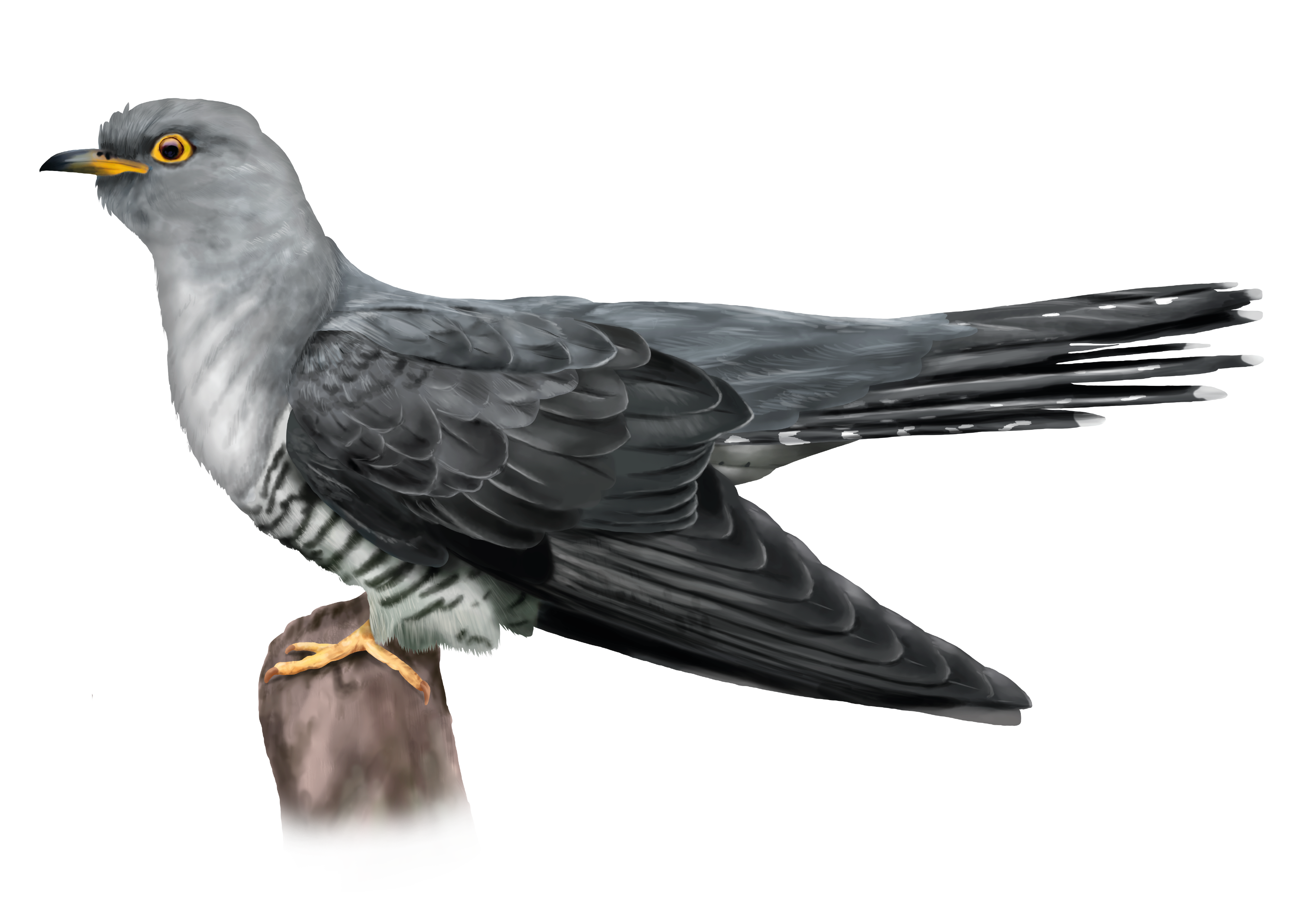
Vol. 18 No. 194 (2026)Tras finalizar el Posgrado de Ilustración Científica de la UPV/EHU, realicé esta ilustración específicamente para el III Concurso de Ilustración Científica de la Facultad de Ciencias de la Universidad de Málaga. Elegí al cuco común (Cuculus canorus) como protagonista por sus peculiares estrategias reproductivas, basadas en el parasitismo de puesta. Este comportamiento, junto con el inconfundible canto del macho, del que deriva el nombre común de la especie, constituye una de sus señas de identidad más características. Se trata de un ave migradora ampliamente distribuida por Europa, Asia y el norte de África, donde se reproduce, y que pasa el invierno en el África subsahariana y el sudeste asiático. Por este motivo, en la tradición europea el canto del cuco común se ha asociado históricamente con la llegada de la primavera. A pesar de no ser una rapaz, el cuco puede confundirse con el gavilán debido a su silueta y patrón de plumaje. Además, emite llamadas que imitan las de esta ave de presa, lo que provoca que pequeños pájaros abandonen momentáneamente sus nidos y le permite depositar sus huevos sin ser detectado. Cada hembra produce huevos con un patrón de color específico y suele especializarse en parasitar especies hospedadoras cuyos huevos presentan una mayor similitud. La eclosión del polluelo de cuco suele adelantarse a la de los pollos legítimos, lo que le permite eliminar los huevos o crías restantes, arrojándolos fuera del nido. De este modo, el joven cuco recibe en exclusiva el cuidado parental de los hospedadores.
Alais Sorzu Agirre
alasoragi6@gmail.com
Mención honorífica de la tercera edición del Concurso de Ilustración Científica de la facultad de Ciencias de la UMA
-
Otoño 2025
Vol. 17 No. 193 (2025)La portada
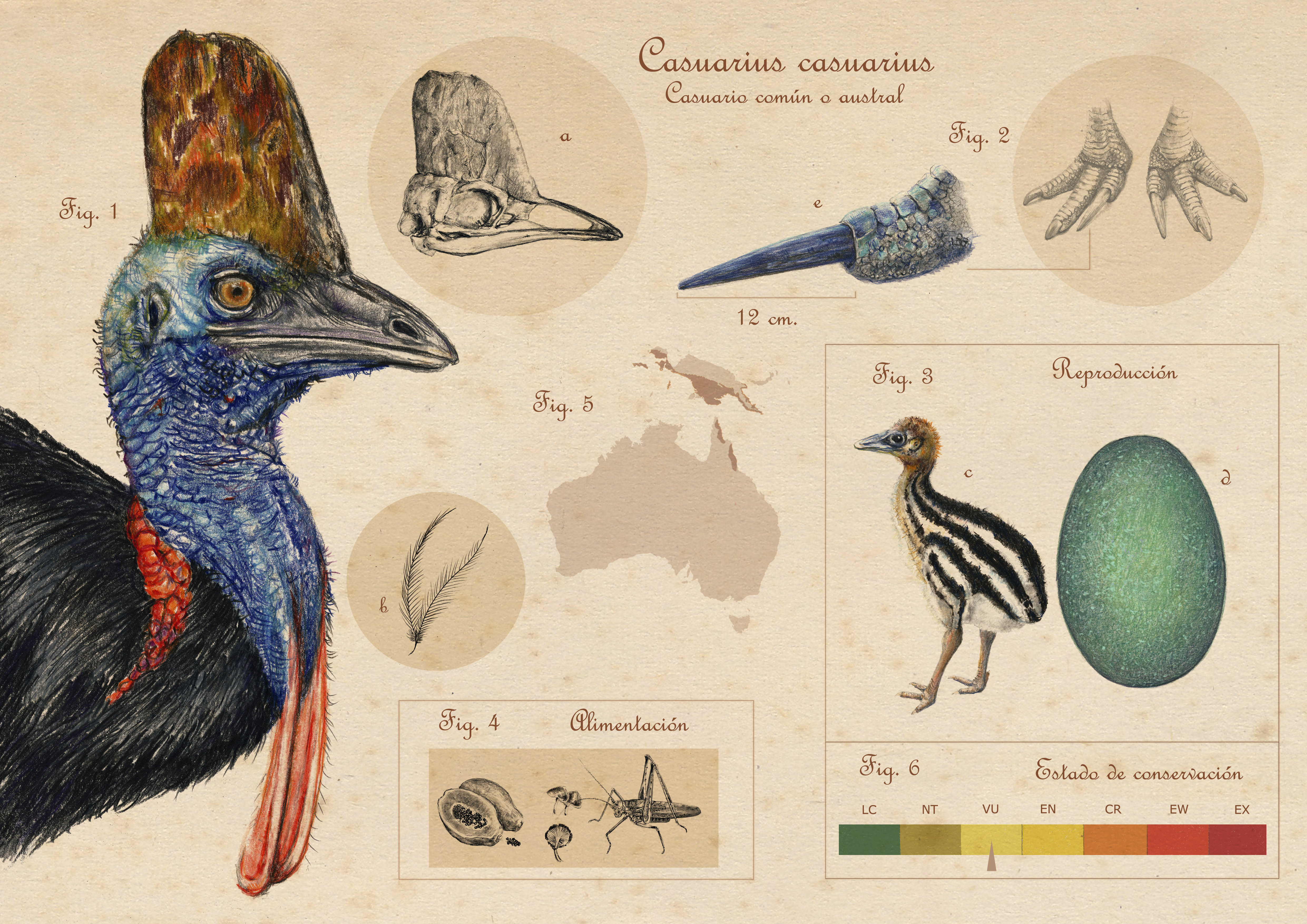
El casuario común o casuario austral puede medir hasta 170 cm y la hembra (Fig. 1) es más grande y vistosa que el macho. Se caracteriza por un gran casquete córneo en la cabeza (a), un pico corto y dos verrugas o carúnculas rojas que le cuelgan del cuello. El plumaje es negro, endeble y afilado en la punta (b). De su defensa destacan las garras de sus tres dedos (Fig. 2). El macho se encarga de la incubación de los huevos que pone la hembra y también del cuidado de las crías (Fig. 3). Su alimentación (Fig. 4) es fundamentalmente vegetariana y ocasionalmente se suman a su dieta pequeños artrópodos. Geográficamente se sitúa al sur de Nueva Guinea, norte de Queensland y las islas Aru (Fig. 5) y está clasificado en la categoría de especie amenazada (Fig. 6).
Cristina Manzano Espinosa
Mención honorífica de la tercera edición del Concurso de Ilustración Científica de la facultad de Ciencias de la UMA
_________________________________________________________________________________
Número 193
-

Especial Seminarios del Instituto de Hortofruticultura Subtropical y Mediterránea “La Mayora” (IHSM)
Vol. 17 No. 192 (2025)Sobre la portada
Composición realizada por Javier Pozueta Romero con los carteles correspondientes a los Seminarios IHSM La Mayora 23/24.
-

Verano 2025
Vol. 17 No. 191 (2025)The cover page
The monarch butterfly (Danaus plexippus) is a species of lepidopteran native to the American continent, known for its complex and extensive annual migration. Each year, it travels more than 4,000 km from the northern United States and southern Canada to central Mexico forests, where it hibernates. Its characteristic orange and black colors not only make it easily identifiable, but also serve a defensive function by scaring off potential predators. Although native to the Americas, the monarch butterfly was introduced in the 19th century to Australia and New Zealand, where this photograph was taken (Hamilton). As with many species of lepidoptera, the monarch faces threats from habitat loss and climate change, making it urgent to promote conservation actions for this and other species.
Rubén Fernández Santamaría
rubenfernandezsantamaria@gmail.com
-
Primavera 2025
Vol. 17 No. 190 (2025)The cover
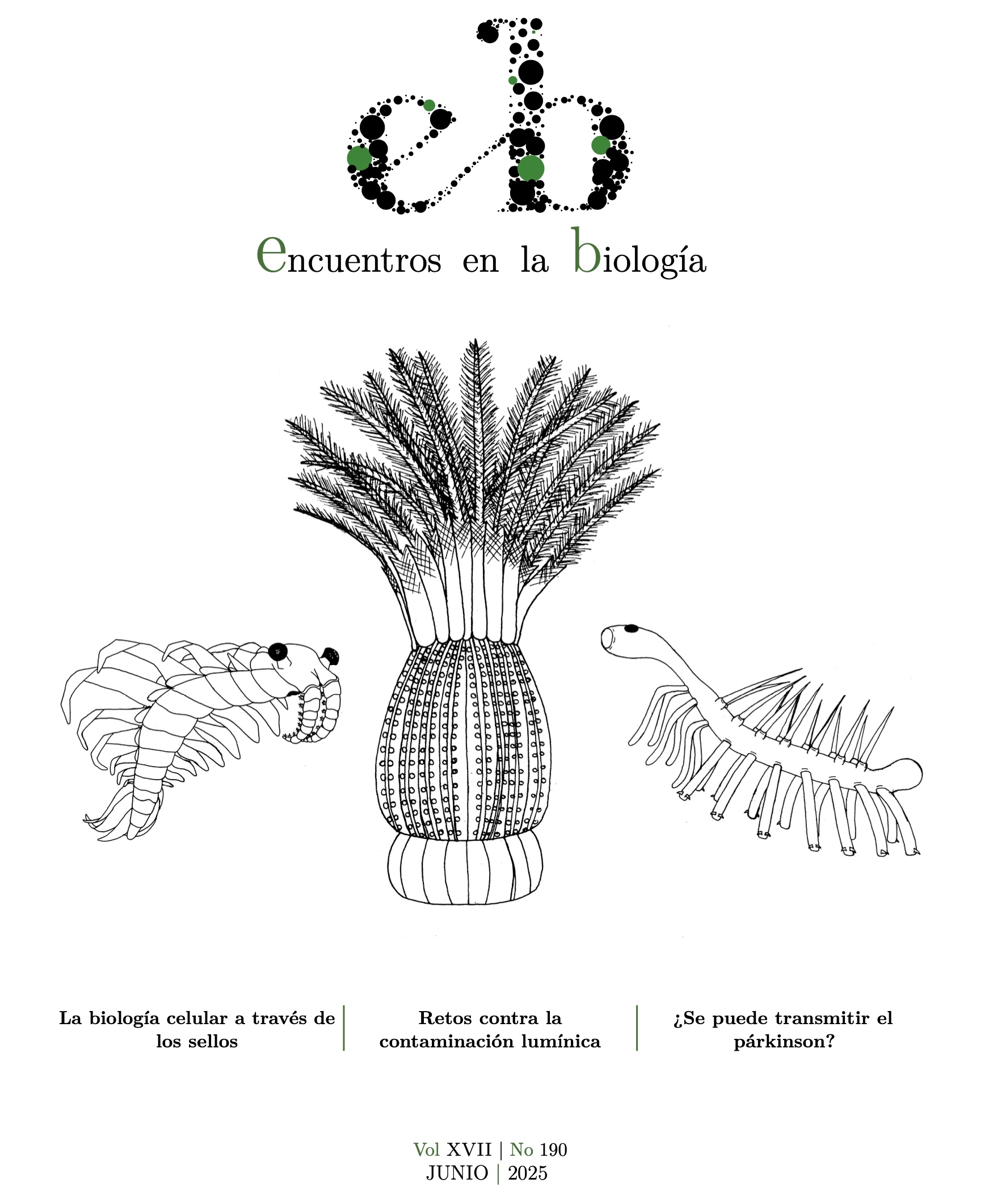
The genera Anomalocaris, Hallucigenia and Xianguangia belonged to the Cambrian period, when the first predators appeared in the fossil record. Anomalocaris had spiny appendages on its head with which it carried food to its mouth, which was shaped like a pineapple slice, and teeth to crush it. It could measure up to one meter. Hallucigenia was no more than a few centimeters long and had a long body with spines on the dorsal side and soft-tissue limbs on the ventral side. Xianguangia was a sessile organism. It had a cylindrical body with numerous feather-like tentacles around an oral disc, adapted for filter feeding.
Naia Salas Vega
naiasv03@gmail.com
-

Verano 2024
Vol. 16 No. 187 (2024)On the cover
The African savannah elephant (Loxodonta africana) is considered endangered due to the alarming decline of its populations in the wild. In this issue, Conrado González Ferreira discusses how poaching for ivory is such a selection pressure that it is causing the decline of those genotypes that code for large tusks. The cover photo was taken by this author in Chobe National Park in the Republic of Botswana.







1-25 of 133
Next