The sequencing of the genomes of two turtles: Pelodiscus sinensis and Chelonia mydas
Keywords:
sequencing of the genomes, turtles, Pelodiscus sinesis, Chelonia mydasAbstract
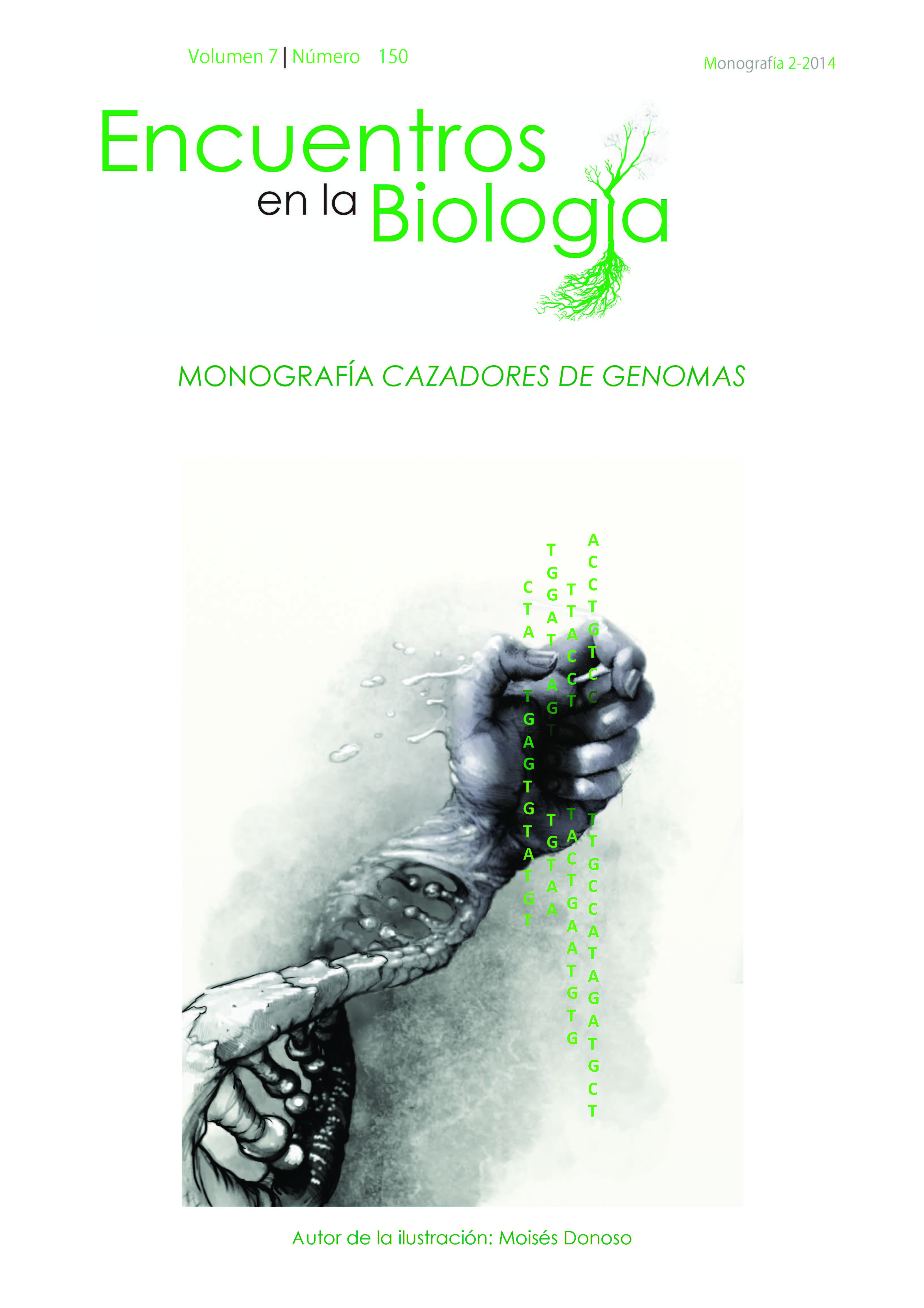
As is well known, evolution consists of descent with modification, which implies a very important fact in the evolutionary framework: that everything new derives from something old. However, this is not so clear for certain structures, which are called true innovations; that is, they do not clearly appear from the modification of a structure that was previously present. One of these structures is the turtle shell.
Downloads
Metrics
Publication Facts
Reviewer profiles N/A
Author statements
Indexed in
-
—
- Editor & editorial board
- profiles
- Academic society
- N/A
- Publisher
- Uma Editorial. Universidad de Málaga

To learn about these publication facts, click 
PF is maintained by the Public Knowledge Project
References
Kuraku S, Usuda R, & Kuratani S (2005) Comprehensive survey of carapacial ridge-specific genes in turtle implies co-option of some regulatory genes in carapace evolution. Evolution & Development 7(1):3-17.
Burke A (1989) Development of the turtle carapace: implications for the evolution of a novel bauplan. J Morphol 199:363-378.
Wang Z, et al. (2013) The draft genomes of soft-shell turtle and green sea turtle yield insights into the development and evolution of the turtle-specific body plan. Nature Genetics.
Downloads
Published
How to Cite
Issue
Section
License
Esta obra está bajo licencia internacional Creative Commons Reconocimiento-NoComercial-CompartirIgual 4.0.
Esta revista provee acceso libre inmediato a su contenido bajo el principio de hacer disponible gratuitamente la investigación al público. Todos los contenidos publicados en Encuentros en la Bilogía están sujetos a la licencia Creative Commons Reconocimento-NoComercia-Compartirigual 4.0 cuyo texto completo puede consultar en <http://creativecommons.org/licenses/by-nc-sa/4.0>
Se pueden copiar, usar, difundir, transmitir y exponer públicamente, siempre que:
Se cite la autoría y la fuente original de su publicación (revista, editorial y URL de la obra).
No se usen para fines comerciales.
Se mencione la existencia y especificaciones de esta licencia de uso
Los derechos de autor son de dos clases: morales y patrimoniales. Los derechos morales son prerrogativas perpetuas, irrenunciables, intransferibles, inalienables, inembargables e imprescriptibles. De acuerdo con la legislación de derechos de autor, Encuentros en la Biología reconoce y respeta el derecho moral de los autores/as, así como la titularidad del derecho patrimonial, el cual será cedido a la Universidad de Málaga para su difusión en acceso abierto. Los derechos patrimoniales, se refieren a los beneficios que se obtienen por el uso o divulgación de las obras. Encuentros en la Biología se publica en open access y queda autorizada en exclusiva para realizar o autorizar por cualquier medio el uso, distribución, divulgación, reproducción, adaptación, traducción o transformación de la obra.
Es responsabilidad de los autores/as obtener los permisos necesarios de las imágenes que están sujetas a derechos de autor.
Los autores/as cuyas contribuciones sean aceptadas para su publicación en esta revista conservarán el derecho no exclusivo de utilizar sus contribuciones con fines académicos, de investigación y educativos, incluyendo el auto-archivo o depósito en repositorios de acceso abierto de cualquier tipo.
La edición electrónica de esta revista esta editada por la Editorial de la Universidad de Málaga (UmaEditorial), siendo necesario citar la procedencia en cualquier reproducción parcial o total.
