Lunfardo in tango lyrics and its impact on the learning of Argentinian Spanish: a case study
DOI:
https://doi.org/10.24310/isl.v18i1.15626Keywords:
lunfardo, tango, Spanish as a Foreign Language, motivation, ArgentinaAbstract
This research paper presents a study on lunfardo (Argentinian slang), in which lyrics from tangos are used to discover expressions from this slang and their meaning in current-day standard Argentinian Spanish. From this exploration, an intervention programme is elaborated whereby the slang words and tango music are employed as motivating elements for the improvement in the learning of Spanish as a Foreign Language. This programme uses a series of exercises undertaken by a limited number of students online which are completed in combination with with synchronous video conference calls and diachronic activities. The COVID 19 pandemic has had an effect on the development of this research and has led us to adapt the program to the current health situation suffered across the world during this process. Nevertheless, with the results obtained, we have been able to see how objectives were attained, and we have found that the use of lunfardo in the teaching of Spanish in Argentina has improved Spanish language among learners while also helping them to maintain high levels of motivation throughout the process.
Downloads
Metrics
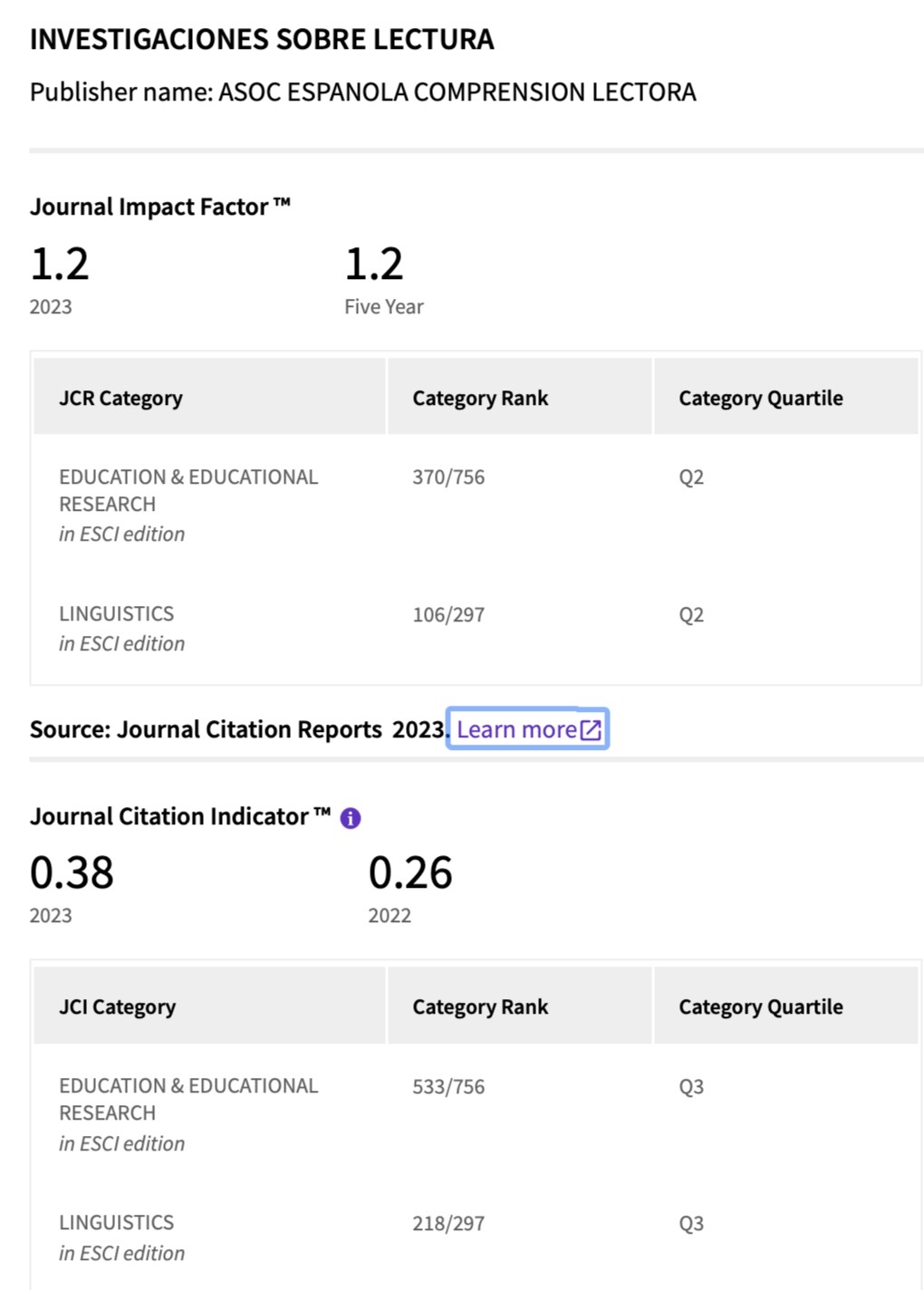
Publication Facts
Reviewer profiles N/A
Author statements
- Editor & editorial board
- profiles
- Academic society
- N/A
- Publisher
- EduVerso, Universidad de Málaga

To learn about these publication facts, click 
PF is maintained by the Public Knowledge Project
References
Conde, O. (2004). Diccionario etimológico del lunfardo. Bueno Aires: Taurus
Conde, O. (2010). El lunfardo en la literatura argentina. Conferencia presentada en las Jornadas de Literatura Argentina. Facultad de Filosofía y Letras en la Universidad del Salvador (USAL), Buenos Aires, Argentina. Gramma, XXI, 47 recuperado en s/Dialnet-ElLunfardoEnLaLiteraturaArgentina-6069173%20(1).pdf
Conde, O. (2011). Lunfardo. Barcelona: Taurus.
Conde, O. (2017). Aportes al estudio del lunfardo: acreencias y deudas de la investigación lingüística argentina. Signo y Seña, 32, 1-20.
Creswell, W. (2009). Research Design: Qualitative, Quantitative, and Mixed Methods Approaches. London: SAGE Publications.
Denis, M. y Matas, M. (1999). Para una didáctica del componente cultural en clase, en Monográficos Marco ELE, Número 9, Didáctica del Español como Lengua Extranjera. Expolingua.
Devoto, F. (2007). La inmigración de ultramar. En: Torrado S (ed.). Población y bienestar en la Argentina del primero al segundo centenario. Edhasa, Buenos Aires Recuperado de http://www.valijainmigracion.educ.ar/contenido/materiales_para_formacion_docente/textos_de_consulta/9%20Devoto%20-%20La%20inmigracion%20de%20ultramar.pdf
Espíndola, A. (2003). Diccionario del lunfardo. A. Buenos Aires: Planeta.
Gobello, J. (1996). Aproximación al lunfardo. Buenos Aires: Ediciones de la Universidad Católica Argentina.
Instituto Cervantes (2021). El español en el mundo. Anuario del Instituto Cervantes 2021. https://cvc.cervantes.es/lengua/anuario/anuario_21/default.htm
Merino, M. M. G. (2005). La importancia de la competencia sociocultural en el aprendizaje de segundas lenguas. Interlingüística, (16), 431-441.
Sáez, L. J. (2017). Investigación educativa, fundamentos teóricos, procesos y elementos prácticos: enfoque práctico con ejemplos, esencial para TFG, TFM y tesis. Madrid: UNED.
Santesmases, M. (2009). Dyane Versión 4. Diseño y análisis de encuestas en investigación social y de mercados. Madrid, Ediciones Pirámide.
Vega, C. 2016. Estudios para los orígenes del tango argentino. Buenos Aires. Fundación Universidad Católica Argentina. Segunda edición. Recuperado en: https://repositorio.uca.edu.ar/bitstream/123456789/1214/1/origenes-tango-argentino-vega.pdf
Willenpart, L. (2001). El tango: temas y motivos, en Verba Hispánica, 9(1), 219–230.
Downloads
Published
How to Cite
Issue
Section
License
All contents published in Investigaciones sobre la Lectura are protected under the Creative Commons Attribution-NonCommercial-ShareAlike 4.0 International (CC BY-NC-SA 4.0) license. All about this license is available in the following link: <http://creativecommons.org/licenses/by-nc-sa/4.0>
Users can copy, use, redistribute, share and exhibit publicly as long as:
- The original source and authorship of the material are cited (Journal, Publisher and URL of the work).
- It is not used for comercial purposes.
- The existence of the license and its especifications are mentioned.
There are two sets of authors’ rights: moral and property rights. Moral rights are perpetual prerogatives, unrenounceable, not-transferable, unalienable, imprescriptible and inembargable. According to authors’ rights legislation, Investigaciones sobre la Lectura recognizes and respects authors moral rights, as well as the ownership of property rights, which will be transferred to University of Malaga in open access. The property rights are referred to the benefits that are gained by the use or the dissemination of works. Investigaciones sobre la Lectura is published in an open access form and it is exclusively licenced by any means for doing or authorising distribution, dissemination, reproduction, , adaptation, translation or arrangement of works.
Authors are responsable for obtaining the necessary permission to use copyrighted images.








31.png)